
Visual Language
Drawing is all about creating an image that represents an idea, a feeling, or objects from the world around us. We use symbols to represent what we want to communicate. These symbols are made up of the lines and marks we draw. I feel it is my responsibility to teach the children how to make these symbols and help them to create and adapt each symbol as needed so that it communicates their unique vision.

All About Crayons
By the age of six most children will have used them extensively, both at home and in school. They are clean and portable. They come in so many colors, all in different shapes, sizes and qualities. Most commonly crayons are formed into “sticks,” usually long pointed cylinders or into “blocks,” cuboid shapes with varying width surfaces, which can be used to make many different sized marks. In the schools where I have worked, the students have access to both sticks and blocks in a range of colors. My task here is not to promote a certain type of crayon for this work. You must be free to make your own choices based on your preferences and circumstances. When considering what crayons you make available to the children, you will need to consider color quality, durability, cost, and availability.
Drawing With Children
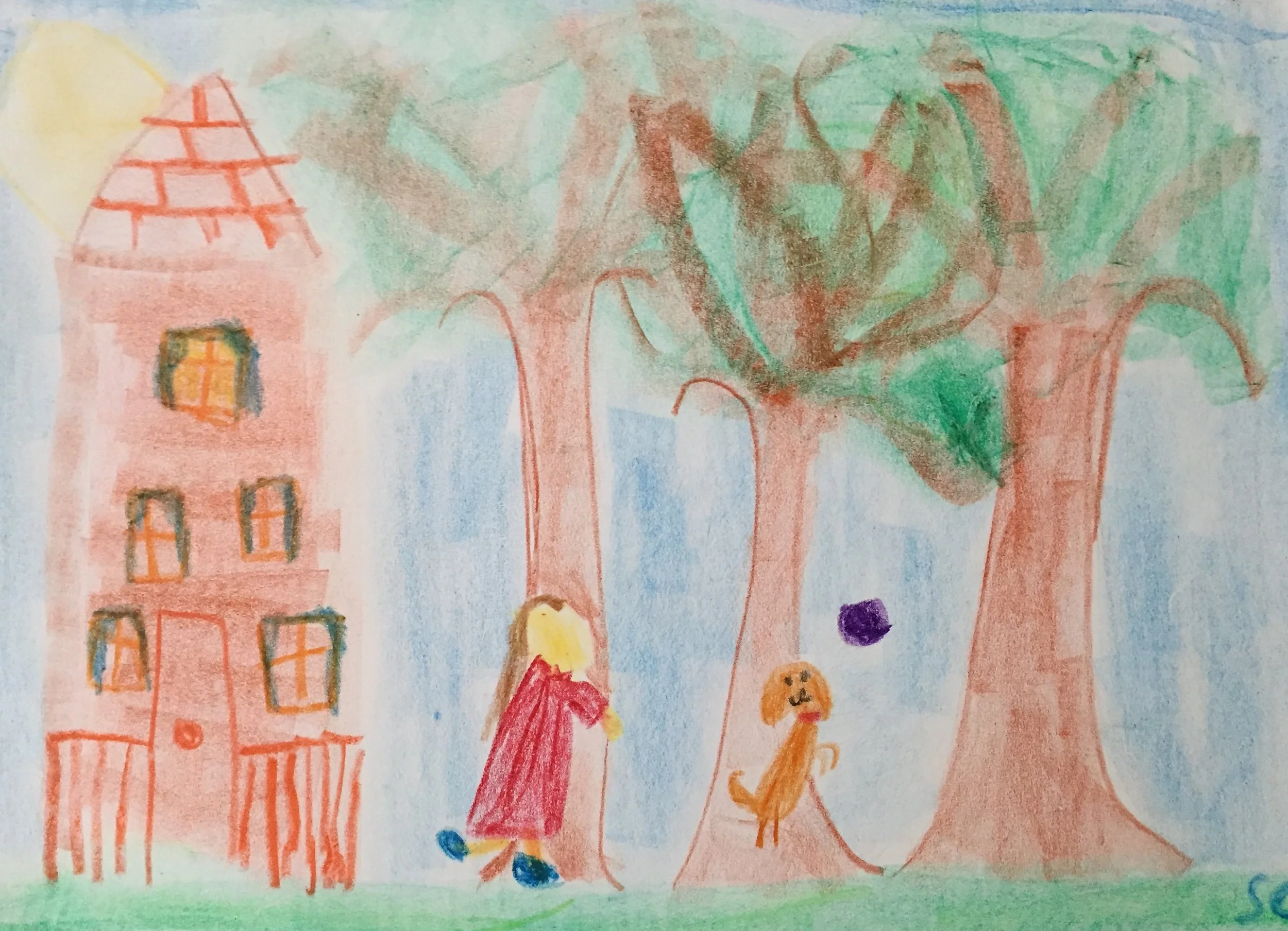
One of my greatest pleasures is drawing with children. I only need to give a child a spark of an idea and their imagination runs wild. When I watch them working carefully and intently with line and color, I am inspired on all levels of my being. Their work is playful and unplanned. They do not think much before they do, they just live within the experience of drawing. What is revealed on the paper, their creation, is not separate from them, it is alive with them. These drawings are true acts of creation occurring in front of my eyes. Children, like all humans, are creators and through the act of art-making we live within the realm of the gods.